Why Is It Called Klondike Solitaire? The History Behind the Name
You’ve probably played thousands of games of solitaire without once wondering why it’s called “Klondike.” The answer involves gold miners, brutal Arctic winters, and a connection between shuffling cards and panning for treasure that’s more poetic than you’d expect.
The Origin of Klondike Solitaire: The 1896 Gold Rush
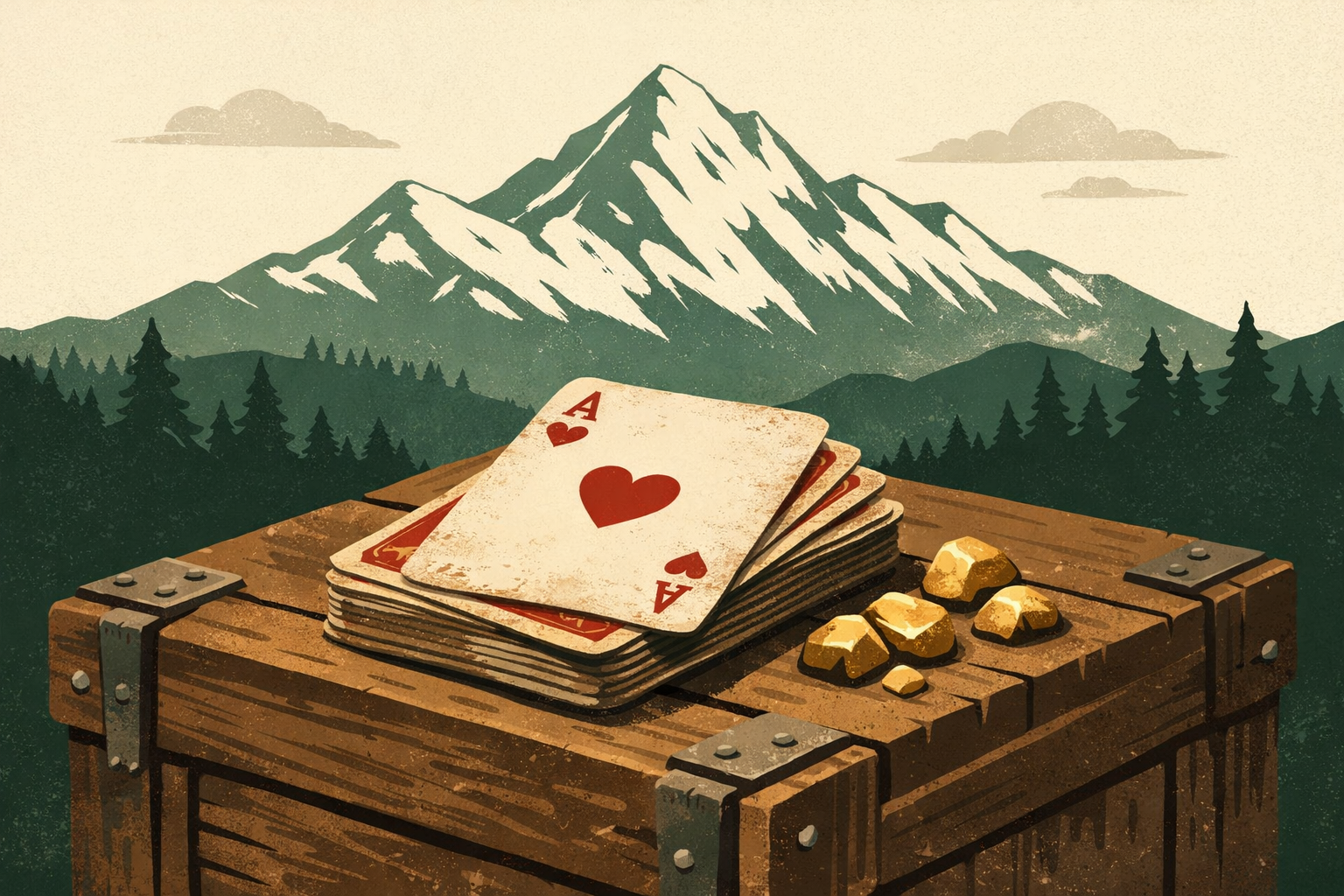
In 1896, gold was discovered in Canada’s Yukon territory. Over 100,000 prospectors flooded into the Klondike region hoping to strike it rich. Most found only hardship: cramped tents, temperatures plunging below zero, and endless dark winter nights with nothing to do but wait.
A worn deck of cards became precious—not for gambling, but for passing those brutal hours alone. Card solitaire already existed in Europe (the earliest references date to the 1750s), but this particular variant became inseparable from the Gold Rush camps. The game and the place eventually shared a name.
The game was also called “Canfield” in some regions, named after Richard Canfield, who ran a famous gambling house in Saratoga Springs, New York during the same era.
Did Napoleon Invent Solitaire?
No—that’s a persistent myth historians have thoroughly debunked. While solitaire variants like “Napoleon at St. Helena” bear his name, the game predates his 1815 exile by decades. Napoleon actually preferred Whist and Vingt-Un (Blackjack). The legend likely stuck because it makes a romantic story: the fallen emperor, alone with his cards.
Why Klondike Solitaire Feels Like Panning for Gold
Here’s what makes the Klondike connection genuinely interesting: the game feels like panning for gold.
A gold panner sifts through sediment, patiently separating worthless gravel from valuable nuggets. A Klondike player does something remarkably similar—sorting through a shuffled deck, patiently moving cards, searching for the sequence that unlocks everything.
Both reward patience over haste. Both involve methodical sorting. Both offer that tantalizing “just one more try” pull, despite odds that aren’t exactly in your favor. For prospectors who spent their days at the creek bed, the evening’s card game must have felt like a natural extension of their daily work.
Why Klondike Is the Most Popular Solitaire Game
Hundreds of solitaire variants exist—Spider, FreeCell, Pyramid, and dozens more. Yet Klondike became so dominant that saying “solitaire” without any qualifier simply means Klondike in North America.
Microsoft Made It Famous
Microsoft accelerated Klondike’s dominance. When Windows 3.0 shipped in 1990, it included Klondike solitaire—officially to teach users how to drag and drop with a mouse, unofficially to help millions procrastinate. That decision put the game on over a billion computers.
The game was created by intern Wes Cherry, with card artwork by legendary designer Susan Kare (who also designed the original Macintosh icons). In 2019, Microsoft Solitaire was inducted into the World Video Game Hall of Fame.
Klondike Solitaire by the Numbers
- 35 million monthly active players on Microsoft Solitaire alone
- 100 million solitaire games played daily worldwide
- 2 billion mobile solitaire downloads in 2024
- 79-82% of games are theoretically winnable
The History of Solitaire: A Timeline
| Year | Event |
|---|---|
| 1750s | Earliest known references to solitaire in Europe |
| 1896 | Klondike Gold Rush begins; game gains its name |
| 1899 | Richard Canfield popularizes the game in New York |
| 1990 | Microsoft bundles Klondike with Windows 3.0 |
| 2019 | Microsoft Solitaire enters Video Game Hall of Fame |
Play Klondike Solitaire Online
The next time you deal out those seven columns and start flipping cards, you’re doing what prospectors did in candlelit tents over a century ago—patiently searching for order in chaos, hoping this time the cards fall right.
The gold fields are long empty. The game endures.
Ready to try your luck? Play Klondike solitaire free on ShuffleSolitaire—no download, no ads, just cards.
Frequently Asked Questions
When was Klondike solitaire invented?
The exact date is unknown, but Klondike solitaire emerged in the late 1800s, with the name tied to the 1896-1899 Klondike Gold Rush in Canada’s Yukon territory.
Why is solitaire called “patience” in the UK?
In Britain and much of Europe, solitaire card games are called “patience” because the game rewards patient, methodical play. “Solitaire” (meaning “solitary”) became the preferred term in North America.
What’s the difference between Klondike and regular solitaire?
There’s no difference—Klondike is “regular” solitaire. It’s the default variant most people think of when they hear “solitaire.” Other variants like Spider and FreeCell have different rules.
Is Klondike solitaire luck or skill?
Both. The initial deal is random (luck), but your decisions significantly impact whether you win. Studies suggest skilled players win about 30% of games, while perfect play could win 80%+.